

Why STEMACES?
A modern, engaging approach to science and engineering for rural and under-resourced middle schools.
About the Program
STEMACES builds on a decade of success with Learning by Making, a ninth-grade curriculum transformed into flexible, modular activities for eighth-grade science classrooms.
🎯 Our goal: empower both teachers and students to do science the way professionals do—inquiry-driven, hands-on, and connected to real careers.
Students gain the skills to code, design circuits, analyze data, and solve problems—bridging classroom learning to STEM careers.
Our Partnership
STEMACES is a collaborative effort between Sonoma State University, Angelo State University, and WestEd.
💰 Funded by a Mid-phase EIR grant (award #S411B230042), improving science learning for rural and under-resourced students in California and Texas.
WestEd supports professional learning and leads evaluation of our program's impact.
Where It Started
In 2013, Learning by Making began as an early-phase EIR project, delivering CSTEM curriculum to economically disadvantaged 9th-grade classrooms.
The curriculum included tech support, over 80 hours of professional development, and a technology platform that now powers STEMACES.
📊 Research showed significant improvements in math and science grades between 2013–2018.
Why Science Education?
Students often learn science from textbooks with little access to real-world tools. Rural schools especially face barriers to hands-on STEM learning.
STEMACES brings coding, engineering, and technology to rural and under-resourced middle schools in California and Texas.
🌟 Our goal is to inspire curiosity and build confidence in every student.
What We Provide
Comprehensive Support Package
- 🔬 STEM+C classroom activities with kits
- 👩🏫 Paid week-long summer Professional Learning (PL) for teachers
- 📚 Guidance on integrating activities into science curriculum
- 🤝 Follow-up PL sessions and ongoing support from coaches
- 📞 On-demand help (call center, listserv, community of practice)
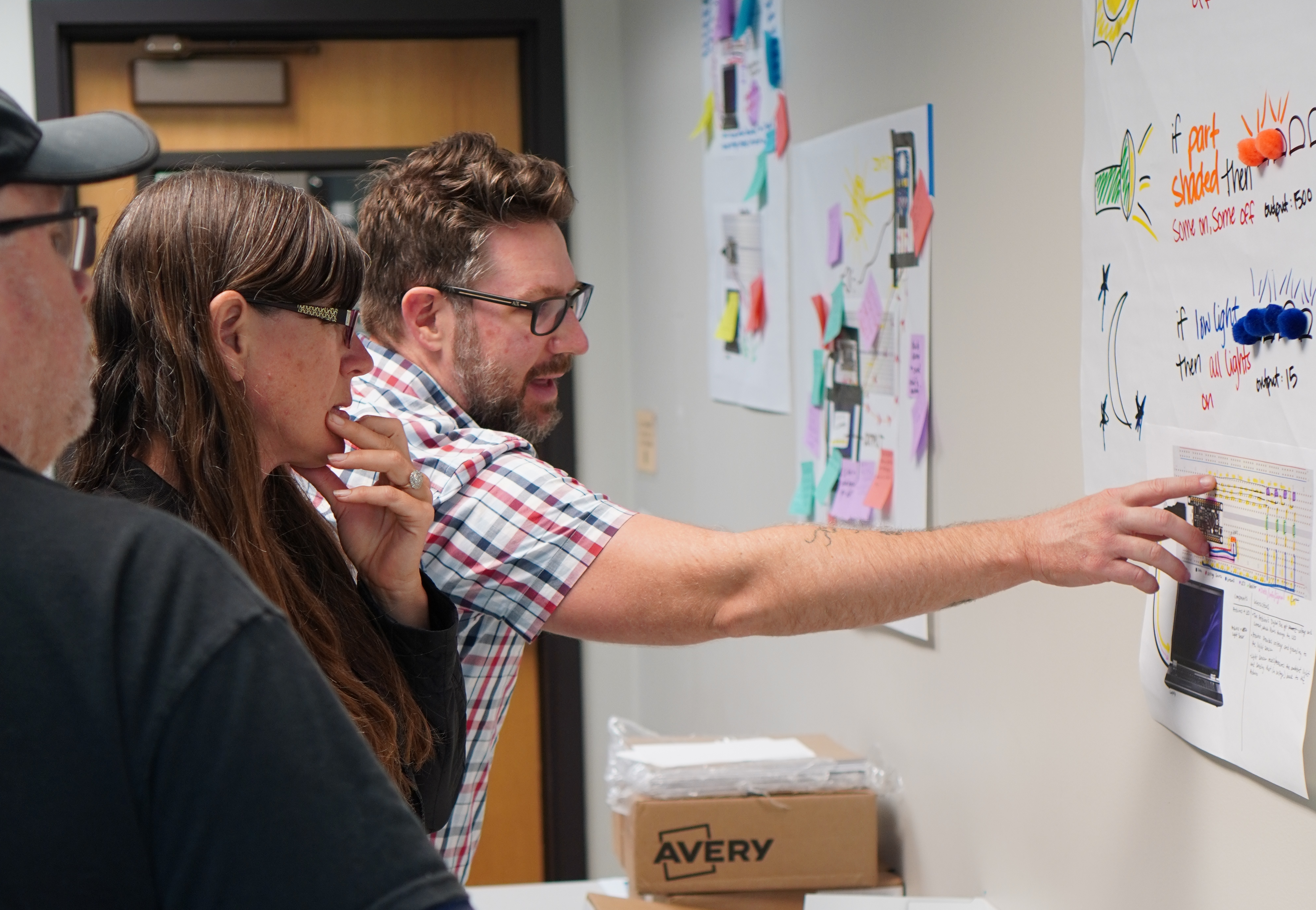
Hands-on learning in action! 🚀
What Teachers Can Expect
Professional development that works! 💡
Teacher Experience Journey
- 🏫 Teachers attend Summer Institute and plan lessons
- 📋 Teachers implement customized lessons in class
- 👩💻 Students code, design circuits, and analyze data
- 👥 Participation in an active community of practice
- 🛠️ Ongoing access to troubleshooting and support